Frequent summer watering can mean forgotten faucets, overwatered plants, and difficulty caring for gardens while away. A conventional timer handles a fixed schedule, but cannot respond to expected rain, wet soil, or changing weather.
With a smart water valve connected to Home Assistant, you can operate irrigation remotely, schedule separate areas, skip watering before rain, or water when soil becomes dry. Models with flow monitoring can also measure water use. This guide concentrates on hose-connected valves for lawns, gardens, greenhouses, sprinklers, and drip irrigation.
Which type of water valve fits your system?
Smart water-control devices fall into three main groups:
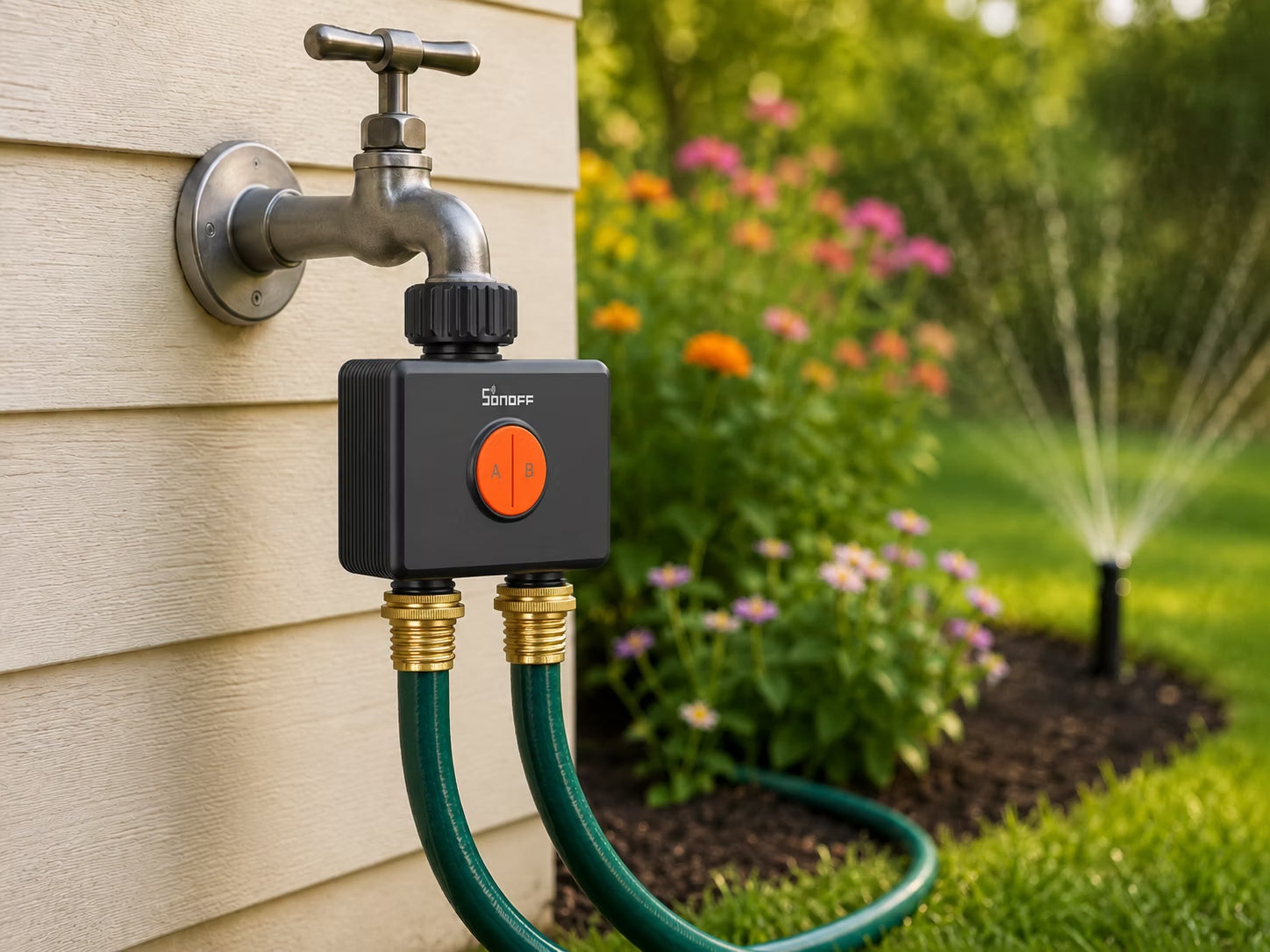
- Hose-connected valves: Usually battery-powered, these fit between an outdoor faucet and a hose, sprinkler, or drip line. They require neither electrical wiring nor permanent plumbing changes and can provide one outlet or two independently controlled outlets.
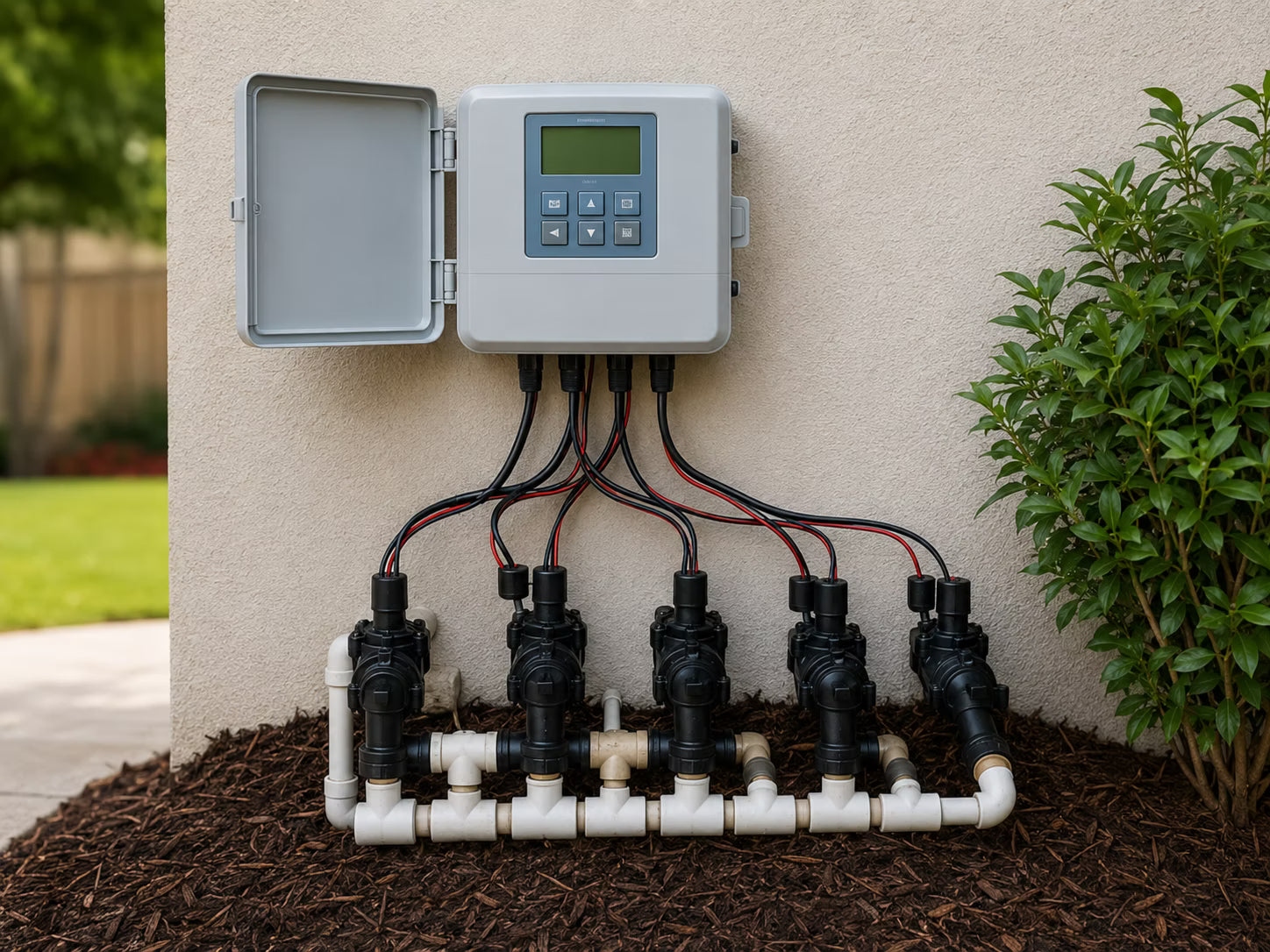
- Irrigation controllers with solenoid valves: Intended for permanent multi-zone systems, including underground lawn sprinklers, these operate wired valves connected to fixed pipework. Installation is more involved and usually requires a power supply.
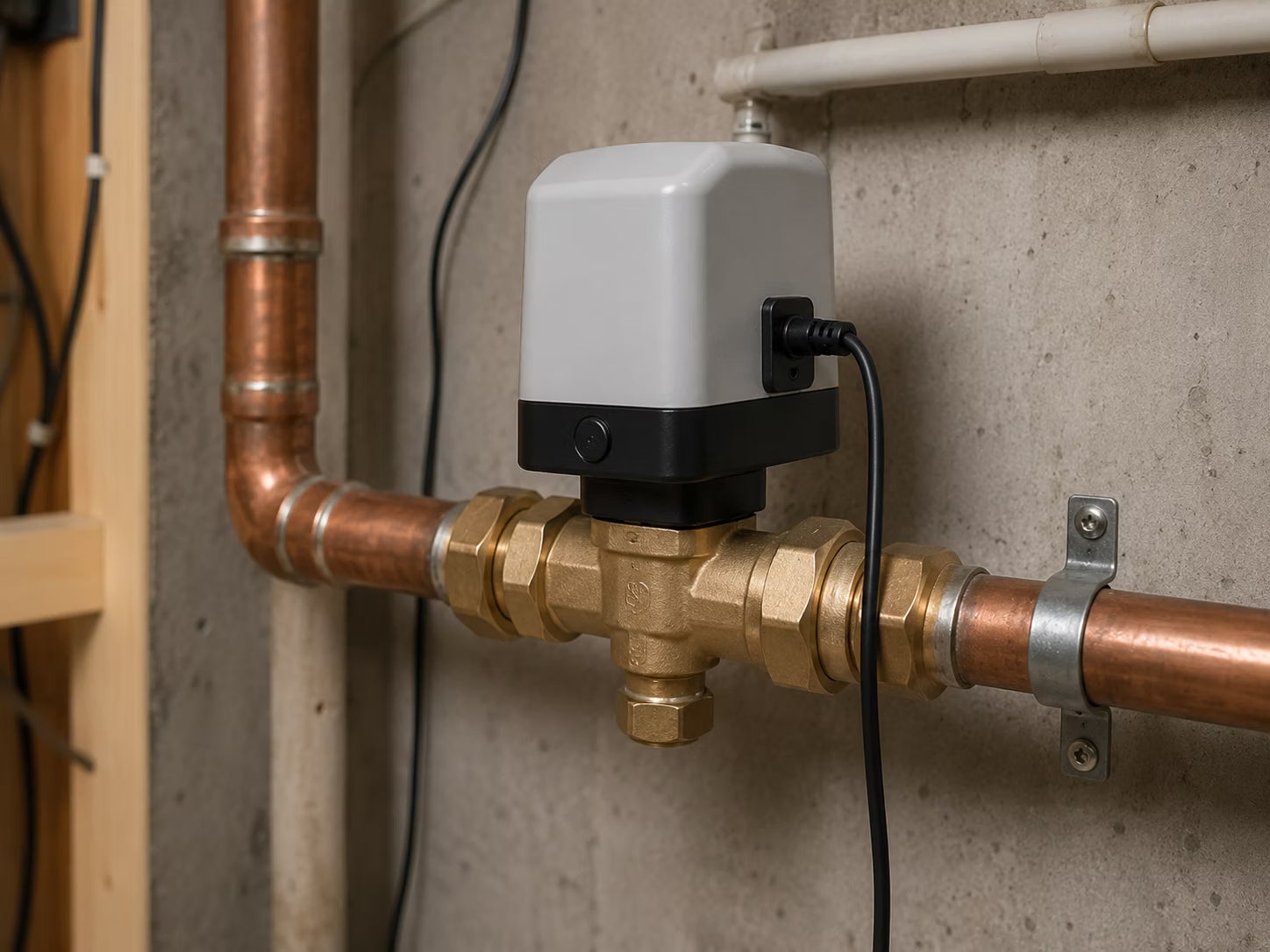
- Whole-home shutoff valves: Installed on the main household water line, these stop the supply during leaks or emergencies rather than manage routine garden watering.
|
Your setup or goal |
Best option |
|
One hose, sprinkler, or drip line |
Single-zone hose-connected valve |
|
Two areas with separate schedules |
Dual-zone hose-connected valve |
|
Permanent multi-zone sprinkler system |
Irrigation controller |
|
Main water shutoff for leak protection |
Whole-home shutoff valve |
What to check before buying
Home Assistant compatibility and available controls
Look for support through ZHA, Zigbee2MQTT, Matter, or an official Home Assistant integration. Compatibility alone is not enough: verify which functions become available after pairing. A valve may expose only on/off control while keeping schedules, flow readings, or advanced settings in its manufacturer's app. This applies to Zigbee, Matter, and Wi-Fi models alike.
Outlets and flow monitoring
One outlet is generally sufficient for a sprinkler, drip line, greenhouse, or garden bed. Choose two outlets when areas such as a lawn and flower bed need independent schedules.
A flow meter is optional for straightforward timed irrigation—for example, running a drip line for 20 minutes each morning. It becomes useful when you want to measure consumption, stop at a target volume, identify abnormal flow, or verify that water is moving after the valve opens.
Outdoor durability and installation requirements
Check the IP rating, operating-temperature range, inlet material, and thread durability. Outdoor valves face rain, sunlight, temperature changes, and movement from attached hoses. Many are not frost-resistant; in freezing climates, disconnect the valve and store it indoors over winter to help avoid damage.
Wireless coverage matters too. Exterior walls and distance can weaken Zigbee reception, so a nearby mains-powered Zigbee router may be necessary.
Also confirm:
- Inlet and outlet thread sizes, including compatibility with local faucet and hose standards
- Supported water-pressure range
- Battery life and power options
- Manual operation if Home Assistant or the network is unavailable
- Maximum runtime or automatic shutoff protection
A maximum runtime closes the valve after a defined period, providing protection against overwatering.
SONOFF water valves compared
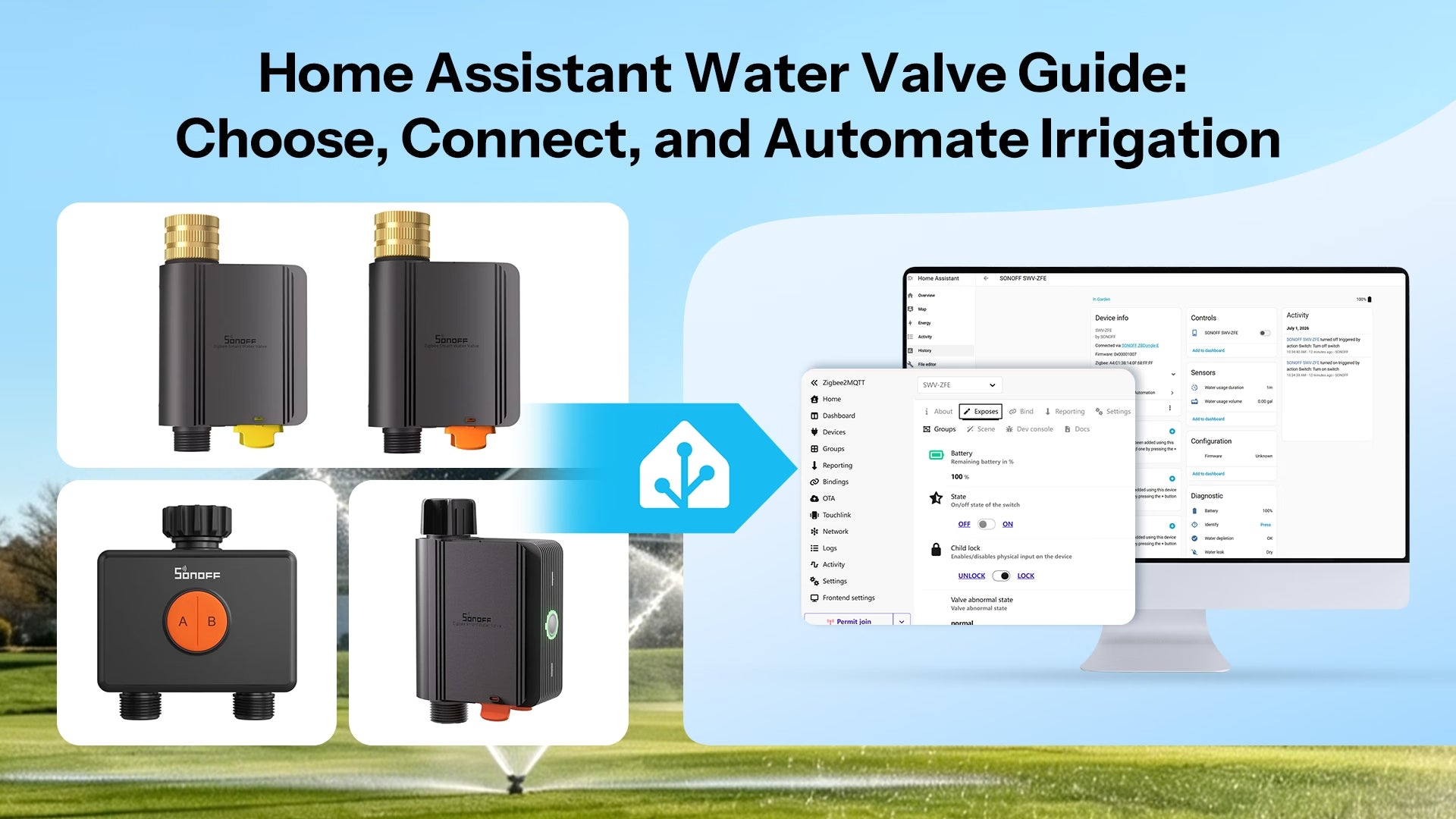
The following SONOFF Zigbee models address single-zone watering, flow monitoring, and independent two-zone irrigation. Base your choice on the number of zones and whether you need water-use measurement, then check the differences in ZHA and Zigbee2MQTT support.
Hydro ONE Lite
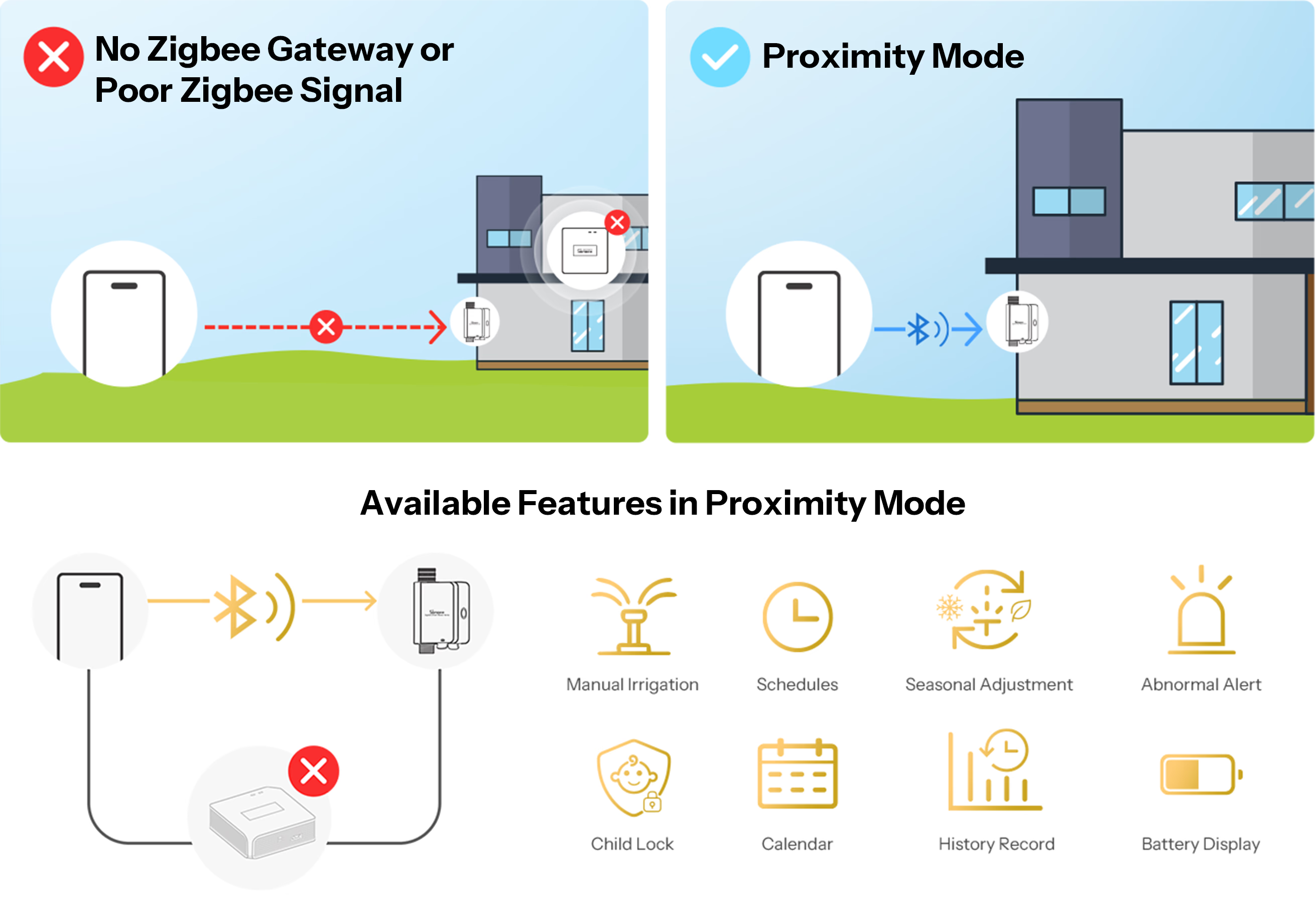
Hydro ONE Lite has one outlet and no flow meter. Its upgraded brass inlet improves durability under long-term water pressure and sun exposure. It offers Zigbee 3.0 and proximity communication, runs on 4 x AA batteries, and connects to Home Assistant through Zigbee2MQTT or ZHA.
It suits a single sprinkler, drip line, greenhouse, vegetable patch, or garden bed where timed or condition-based watering is sufficient and consumption tracking is unnecessary.
Hydro ONE
Hydro ONE combines a single outlet with a built-in flow meter, supporting timed and volume-based watering for one independently controlled area. Its brass inlet improves strength and corrosion resistance outdoors. Zigbee 3.0, proximity communication, 4 × AA battery power, and support for Zigbee2MQTT or ZHA provide its control and integration options.
It is suited to lawns, gardens, vegetable patches, pool top-ups, and drip irrigation where tracking water use matters.
Hydro DUO
Hydro DUO provides two independently controlled channels and a flow meter, allowing each zone to follow a different watering plan. Its brass inlet provides a durable connection, and an anti-slip texture makes hand-tightening easier.
The valve has an IP65 rating, runs on 4 × AA batteries, supports Type-C power, and offers Zigbee 3.0 and proximity communication. Home Assistant integration is available through Zigbee2MQTT or ZHA. It suits combinations such as a lawn and flower bed, greenhouse and vegetable garden, or sprinkler and drip line.
Hydro ONE Lite, Hydro ONE, and Hydro DUO are available with BSP (British Standard Pipe) threads for the UK, Europe, and most other regions, or NH (North American hose thread) for North America.
SONOFF Zigbee Smart Water Valve
The original SONOFF Zigbee Smart Water Valve is a single-outlet model with flow monitoring. It fits between a faucet and hose without rewiring or permanent plumbing work, supports timed and volume-based irrigation, and can record consumption and watering duration in supported platforms. It works with ZHA and Zigbee2MQTT.
This model suits a basic lawn sprinkler, garden hose, vegetable patch, or drip line where both smart control and water-use tracking are wanted.
ZHA and Zigbee2MQTT feature support
The tables below show the functions currently available for each SONOFF valve through ZHA and Zigbee2MQTT.
|
Feature |
Hydro ONE Lite |
Hydro ONE |
Hydro DUO |
|||
|
Z2M |
ZHA |
Z2M |
ZHA |
Z2M |
ZHA |
|
|
Manual Irrigation |
✓ |
✓ |
✓ |
✓ |
✓ |
✓ |
|
Scene Linkage |
✓ |
✓ |
✓ |
✓ |
✓ |
✓ |
|
OTA |
✓ |
✓ |
✓ |
✓ |
✓ |
✓ |
|
Display Battery Level |
✓ |
✓ |
✓ |
✓ |
✓ |
✓ |
|
Abnormal Alert (Low Battery & Water Shortage & Water Leakage & Freeze Alert) |
✓* (only support Low Battery alert) |
✓* (Does not support freeze alert) |
✓* (Does not support freeze alert) |
|||
|
Seasonal Adjustment |
✓ |
✓ |
✓ |
✓ |
✓ |
✓ |
|
Smart Schedule |
✓ |
✓ |
✓ |
✓ |
✓ |
✓ |
|
Rain Delay |
✓ |
✓ |
✓ |
✓ |
✓ |
✓ |
|
Set Valve State on Water Shortage |
× |
× |
✓ |
× |
✓ |
× |
|
Child Lock |
✓ |
✓ |
✓ |
✓ |
✓ |
✓ |
|
History Record |
✓ |
✓ |
✓ |
✓ |
✓ |
✓ |
|
Manual Default |
✓ |
✓ |
✓ |
✓ |
✓ |
✓ |
|
Set Unit |
✓ |
✓ |
✓ |
× |
✓ |
× |
|
Weather-based Adjustment |
× |
× |
× |
× |
× |
× |
|
Calendar |
× |
× |
× |
× |
× |
× |
Hydro ONE Lite, Hydro ONE, and Hydro DUO currently need an additional setup script for ZHA. Zigbee2MQTT does not require this script.
For a Hydro Series installation using ZHA, download the instructions and script for your model:
|
Feature |
Zigbee Smart Water Valve |
|
|
ZHA |
Z2M |
|
|
On/Off |
✓ |
✓ |
|
Irrigation Volume |
× |
✓ |
|
History Record |
✓ |
✓ |
|
Local Scene |
✓ |
✓ |
|
OTA |
✓ |
✓ |
Install and connect the valve
Hose-connected valves normally need no rewiring or permanent plumbing alterations. Test the device near its intended installation point, since exterior walls and distance from the coordinator or router can affect reception.
- Confirm that the valve threads match the faucet and hose.
- Check that the sealing washer is correctly seated, then attach the valve and connect the hose or irrigation line. Tighten by hand; avoid overtightening, particularly with plastic fittings.
- Insert batteries or connect USB-C power, depending on the model.
- Briefly turn on the water and inspect the connections for leaks.
For a SONOFF valve, follow the step-by-step smart water valve installation guide for the setup procedure.
Add the device to Home Assistant
The connection method depends on the valve's protocol:
- Zigbee: Enable pairing mode and add the valve through ZHA or Zigbee2MQTT with a compatible coordinator, such as SONOFF ZBDongle-P/ZBDongle-E, PoE Dongle | Dongle-M, Dongle Plus MG24, or Dongle-LMG21. ZHA is generally simpler for beginners. Zigbee2MQTT provides more advanced configuration and often exposes more features, although actual support varies by valve.
- Matter: Use the Home Assistant Companion App on your smartphone to scan the Matter QR code and add the valve through Home Assistant's Matter integration. Matter-over-Thread devices also need a compatible Thread Border Router.
- Wi-Fi: Connect the valve to Wi-Fi, usually through the manufacturer's app, then add it through the manufacturer's official Home Assistant integration or another supported integration. Some models require a cloud account; others allow local control.
Once connected, rename the device and its entities. Test manual opening and closing, then verify that available battery, flow, and status readings update correctly before building automations.
Practical irrigation automations
Scheduled watering with a safety limit
A time-based routine works well for lawns, flower beds, vegetable gardens, greenhouses, and drip systems with predictable needs. It does not require moisture or flow readings.
- Open the valve at the scheduled time.
- Keep it open for the chosen duration.
- Close it when that duration ends.
- Force closure if the maximum runtime is reached.
- Optionally send a completion notification.
Watering early in the morning or in the evening reduces evaporation in hot weather. Set the maximum runtime above the normal duration so it serves as a backup, not the regular shutoff.
SONOFF smart water valves also offer a maximum manual watering duration through the Manual Default feature, which can close the valve automatically after the defined runtime.
Water according to soil moisture
For raised beds, planters, greenhouses, vegetable gardens, and drip zones with variable moisture, a soil sensor lets watering respond to actual conditions rather than the schedule alone.
- At the scheduled time, check whether soil moisture is below the selected threshold.
- Confirm that it is not raining and that the zone has not been watered recently.
- Open the valve only if all conditions are satisfied.
- Close it after the configured duration or when the maximum runtime is reached.
Place the sensor in a representative part of the zone, away from sprinkler heads and exceptionally wet or dry patches. Require readings to stay below the threshold for a defined period, and include a cooldown to prevent brief fluctuations from triggering repeated watering.
Stop at a target water volume
A flow-monitoring valve, such as Hydro ONE or Hydro DUO, can stop watering according to measured consumption rather than elapsed time alone. This is useful for drip irrigation, greenhouses, vegetable gardens, pool top-ups, and other tasks requiring consistent volumes.
- Open the valve and start measuring consumption.
- Close it once the target volume is reached.
- Alert the user if the valve is open but no flow is detected.
- If flow is unusually high, close the valve and send a notification.
- Force closure if the maximum runtime expires before the target volume is delivered.
Volume-based control can improve watering consistency while helping reveal blocked lines, inadequate supply, or unexpected leaks.
Run two zones separately
Use a dual-channel valve or two separate valves when two areas need different schedules, runtimes, moisture thresholds, or target volumes. Examples include a lawn and flower bed, greenhouse and vegetable garden, or sprinkler and drip line.
- Run Zone A according to its own schedule and conditions.
- Start Zone B after Zone A finishes.
- Apply each zone's individual duration, volume, or moisture threshold.
Running zones sequentially helps avoid the pressure or flow reductions that can occur when both operate together. Hydro DUO combines independent outlets and built-in flow monitoring, so separate watering plans do not require two individual valves.
Common compatibility questions
Is Zigbee or Wi-Fi the better choice?
Zigbee often suits battery-powered valves because it supports low-power operation and local control through a coordinator. Wi-Fi may be simpler if you do not already use Zigbee, but some Wi-Fi valves depend on cloud integrations. Your existing Home Assistant system and outdoor coverage determine which is more suitable.
Can a smart valve operate drip irrigation?
Yes, provided the thread size, water pressure, and flow rate match the drip system. Flow monitoring can help measure consumption and detect abnormal flow, but it is not necessary for basic timed watering.
Can one valve manage two independent zones?
A single-outlet valve controls one line. Independent control of two zones requires a dual-outlet model such as SONOFF Hydro DUO, or two separate valves.

