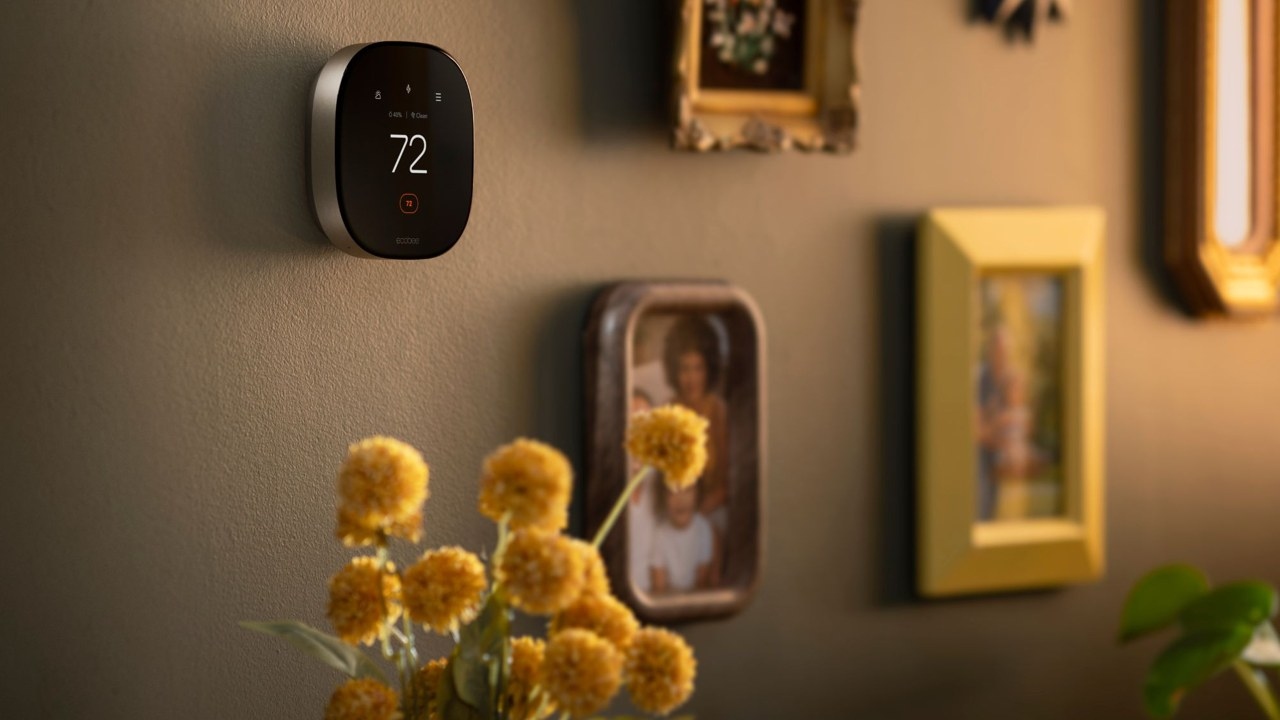
Lowering your thermostat while you sleep or are away saves money. Maintaining 72°F (22°C) all day uses more energy than reducing the temperature when less heat is needed. Small changes can add up throughout winter.
1. Why does lowering the thermostat save money?
A cooler home loses heat more slowly, so its heating system runs less. Rather than holding one temperature around the clock, make small adjustments when you need less warmth. An ecobee smart thermostat can automate these changes through Comfort Settings such as Home, Away, and Sleep, reducing unnecessary energy use over the heating season.
2. What winter temperature should you choose?
There is no ideal setting for every household. Comfort preferences, the building, heating equipment and occupants all matter. Choose a comfortable temperature for waking hours at home and a lower setting for sleep or time away, rather than heating an empty or sleeping home as though everyone were active.
With ecobee, you put those preferences into a schedule, and the thermostat adjusts throughout the day using your chosen Comfort Settings.
3. Is keeping one temperature all day cheaper?
No. A constant setting supplies more heat than necessary while people are asleep or out. Reheating the house does not cancel the savings: because a cooler building loses less heat, the system runs less overall, including the warm-up period.
A schedule matches heating to your routine. Occupancy sensing, discussed below, helps when your day does not follow that schedule.
4. How large should the setback be?
The right setback—the reduction from your usual temperature—depends on your system. Furnaces and boilers deliver heat quickly and can recover from deeper setbacks without using up the savings. The U.S. Department of Energy (DOE), in its thermostat energy-saving guide, suggests a reduction of 7° to 10°F (4° to 6°C) for eight hours daily, such as overnight or during work.
Heat pumps need smaller setbacks. They supply heat steadily rather than in bursts, and raising the setting several degrees at once can trigger more expensive auxiliary (backup) heat. The DOE advises using thermostats designed for heat pumps to limit unnecessary backup heating. Modest setbacks can help.
5. Should you switch the heat off before leaving?
No. In cold weather, lower the heat instead of turning it off. An unheated home can become cold enough for pipes to freeze and may take hours to warm again.
For work or an evening out, use your ecobee thermostat’s Away temperature. This provides most of the savings while keeping the home warm enough to protect pipes. If you return on schedule, it will be comfortable when you arrive.
For longer trips, set a vacation in the ecobee app. Enter your travel dates and an energy-saving temperature that is also comfortable for any pets staying home. You can extend or end the vacation in the app if plans change, allowing the home to return to its usual temperature before you arrive.
6. Can a smart thermostat reduce heating bills?
Yes. It makes temperature adjustments easier and often automatic, lowering the heat during sleep or absence and raising it before you need warmth.
Every ecobee smart thermostat includes the free eco+ energy-saving software. Smart Thermostat Premium and Enhanced can help save up to 26%* on annual heating and cooling costs; Smart Thermostat Essential can help save up to 23%*. Key winter features include:
- Smart Home & Away: Works with your schedule to reduce heat when everyone leaves and raise it when you return. Premium and Enhanced use built-in occupancy sensors; Essential uses a SmartSensor, a small wireless room sensor.
- Schedule Assistant: Uses occupancy sensing to learn when you are home and suggest schedule changes that balance comfort and energy savings.
- Feels Like: Accounts for humidity, since 72°F feels warmer in humid conditions and cooler in dry air. It aligns the setting with how the home feels to avoid heating an already comfortable space unnecessarily.
- Time of Use: Heats or cools before peak electricity rates, then lets the home coast through the peak period. Walls, floors and furniture retain warmth or coolness, reducing system operation when electricity is most expensive.1
Set your Comfort Settings and schedule once to automate the routine. With a heat pump, keep Sleep and Away temperatures closer to Home.
*Savings are compared with a hold of 72°F/22°C. Enabling eco+ smart features can help save up to 26% on annual heating and cooling costs. Actual annual savings depend on energy use.
1 Requires a time-of-use rate plan or a participating utility program.

