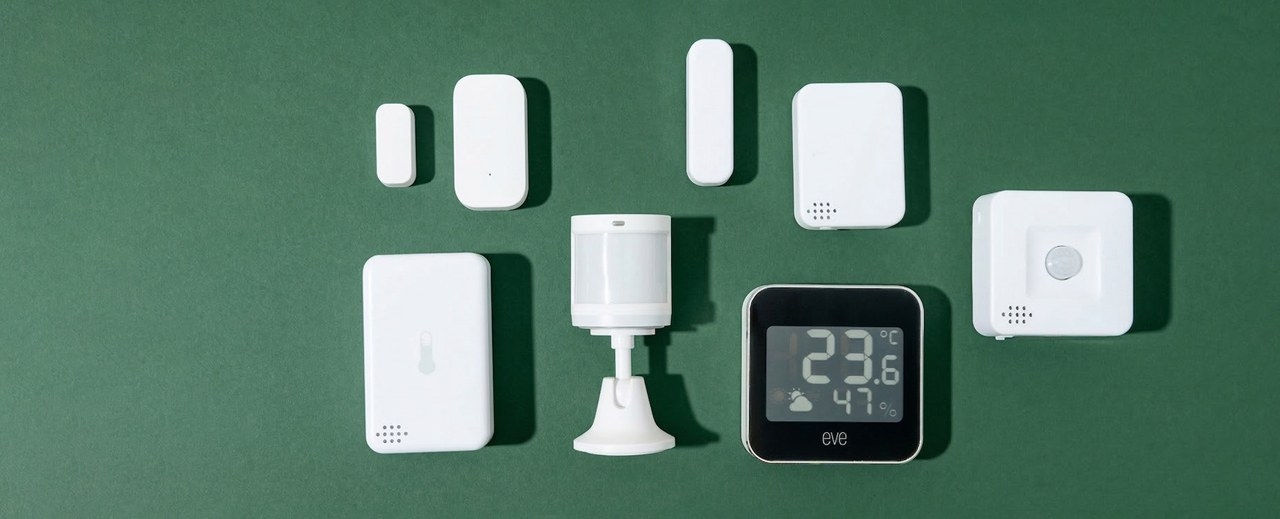
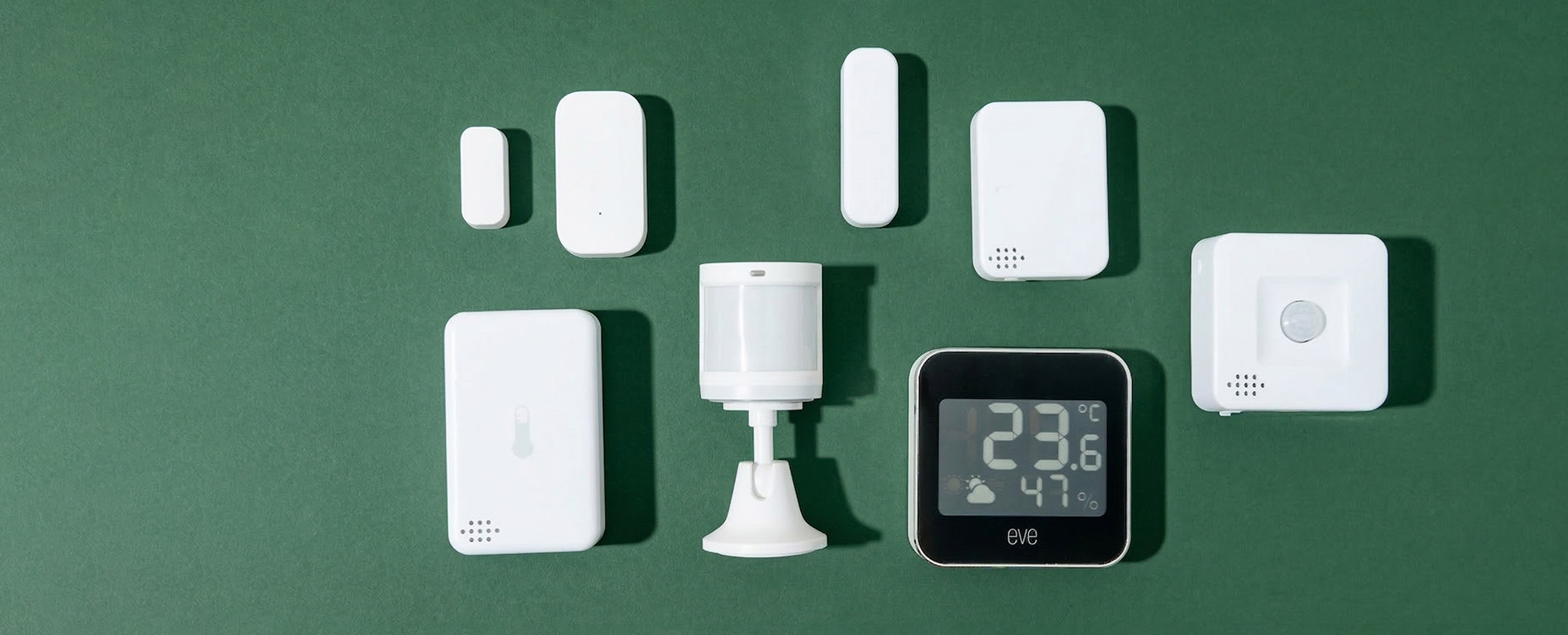
Homey can control devices on its own, but sensors let it respond to actual conditions. Reports of an open window, an occupied room, poor air quality, or unexpected water give automations the context to act without manual input.
Monitoring activity and household hazards
Contact sensors
A contact sensor uses a magnet on the moving door or window and a sensor body on the frame. Separating them tells Homey that the opening is no longer closed. Besides monitoring entry points, this can prevent wasted heating: a Flow can switch off a smart heater as soon as a window opens.
PIR motion sensors
Passive infrared sensors detect moving heat signatures within their field of view. Their quick, reliable response suits hallways, driveways, and entrances, but they may report an empty room if someone stays still long enough.
Use them for lighting where people keep moving, or to receive an alert when someone approaches the front door while you are away.
Presence sensors
mmWave radar detects subtle motion, including breathing and shifting in a chair, to establish continued occupancy. This makes presence sensors useful in offices and living rooms. A Flow can keep a desk lamp or radiator on while you remain there and switch it off after you leave.
Impact and angle sensing
An internal accelerometer detects impacts or changes in angle that a contact sensor would miss. Attached to a washing machine, one can notify you when a cycle finishes; placed on a valuable object, it can warn you that someone is moving it.
Sound sensors
By monitoring ambient noise and distinguishing background sound from sudden, sharp noises, sound sensors let Homey respond without a camera. Uses include recognizing a non-smart smoke alarm or notifying you when a tumble dryer finishes.
Water leak detectors
These small, inexpensive detectors sit flat on the floor and trigger when moisture reaches their contacts. Place them under a sink, behind a washing machine, or near a water heater to help prevent serious damage. Paired with a smart water valve, a Homey Flow can immediately shut off the main supply when a leak is detected.
Smart smoke and CO detectors
Smart detectors provide the functions of a standard alarm while also notifying Homey, allowing a warning to trigger actions throughout the house. For example, smoke detection can activate a Flow that turns every light bright red and unlocks all smart locks, signaling everyone to leave.
Radon and gas sensors
Radon sensors monitor long-term exposure, while gas detectors check for methane or propane leaks near stoves or boilers in real time. These devices monitor hazards that may not be visible or detectable by smell. At dangerous levels, a Flow can issue a smart-speaker alert or close a smart gas valve.
Managing indoor conditions and outdoor spaces
Temperature and humidity sensors
Small, battery-powered sensors give automated climate control more flexible measurement points than a single wall thermostat. Put them in rooms that tend to be warmer or colder to give Homey a clearer picture of conditions. Many devices also include temperature and humidity readings alongside their primary function.
Air quality monitors
These monitors measure CO2, particulate matter, volatile organic compounds, and other pollutants that affect comfort and sleep. They are particularly useful in well-insulated homes with limited ventilation. A Flow can increase an air purifier's speed after a pollutant spike or open a smart window when CO2 exceeds a chosen threshold.
Light and UV sensors
Light sensors measure brightness in lux; UV sensors measure sunlight intensity. Their readings let Homey manage blinds and outdoor lighting according to actual light rather than the clock. A Flow can lower living room shades during peak sunshine to limit heat buildup or activate a patio awning when UV levels become too high.
Wind and rain sensors
These sensors provide local weather information by detecting rainfall and rising wind speeds. Automations can retract an awning as a storm develops, pause sprinklers when it rains, or return a robot mower to its dock before it gets soaked.
Soil moisture sensors
Using electrical conductivity, soil sensors distinguish dry, damp, and saturated conditions to help avoid both too little and too much watering. Place them in flower beds or indoor pots and pair them with a smart irrigation valve in Homey. A Flow can then water only when the soil needs it.
Tracking energy, water, and gas
Electricity monitors
Monitors connected to an electrical panel or plugged into outlets report real-time consumption. Seeing which appliances use the most electricity, and when, helps you move demanding tasks to cheaper or greener hours.
For whole-home readings, the Homey Energy Dongle connects to the utility meter's P1 port. IOmeter offers a wireless alternative for meters in basements or utility rooms without nearby Wi-Fi or a power outlet, sending live readings to Homey every few seconds.
Smart water meters
Measuring flow rate and total volume through the main pipes reveals daily usage and can expose anything from a running tap to a hidden pinhole leak. For example, a Flow can close the main water valve when continuous flow lasts more than 30 minutes, helping catch leaks before they worsen.
Smart gas meters
Gas consumption readings from heating and cooking help relate heating costs to outdoor temperatures and identify unusual patterns. A Flow can warn you when gas is being used even though both the heating and stove should be off.
Solar and battery monitoring
Production and stored-energy readings usually reach Homey from an inverter or battery through a local or cloud integration. With that information, a Flow can start a washing machine or EV charger only when solar production exceeds the home's current consumption, making better use of your own energy.
Connecting sensor readings to actions
Homey supports Zigbee, Z-Wave, Wi-Fi, Bluetooth, 433 MHz, Thread, and Matter, bringing different sensor brands into one system without separate hubs or apps.
Flows and Advanced Flows can combine their information. Together, presence and light sensors can dim lights and adjust the thermostat when you settle into a room; a leak detector and smart valve can protect the house while you are away. Sensors supply the observations, and Homey uses them to make automation responsive.

