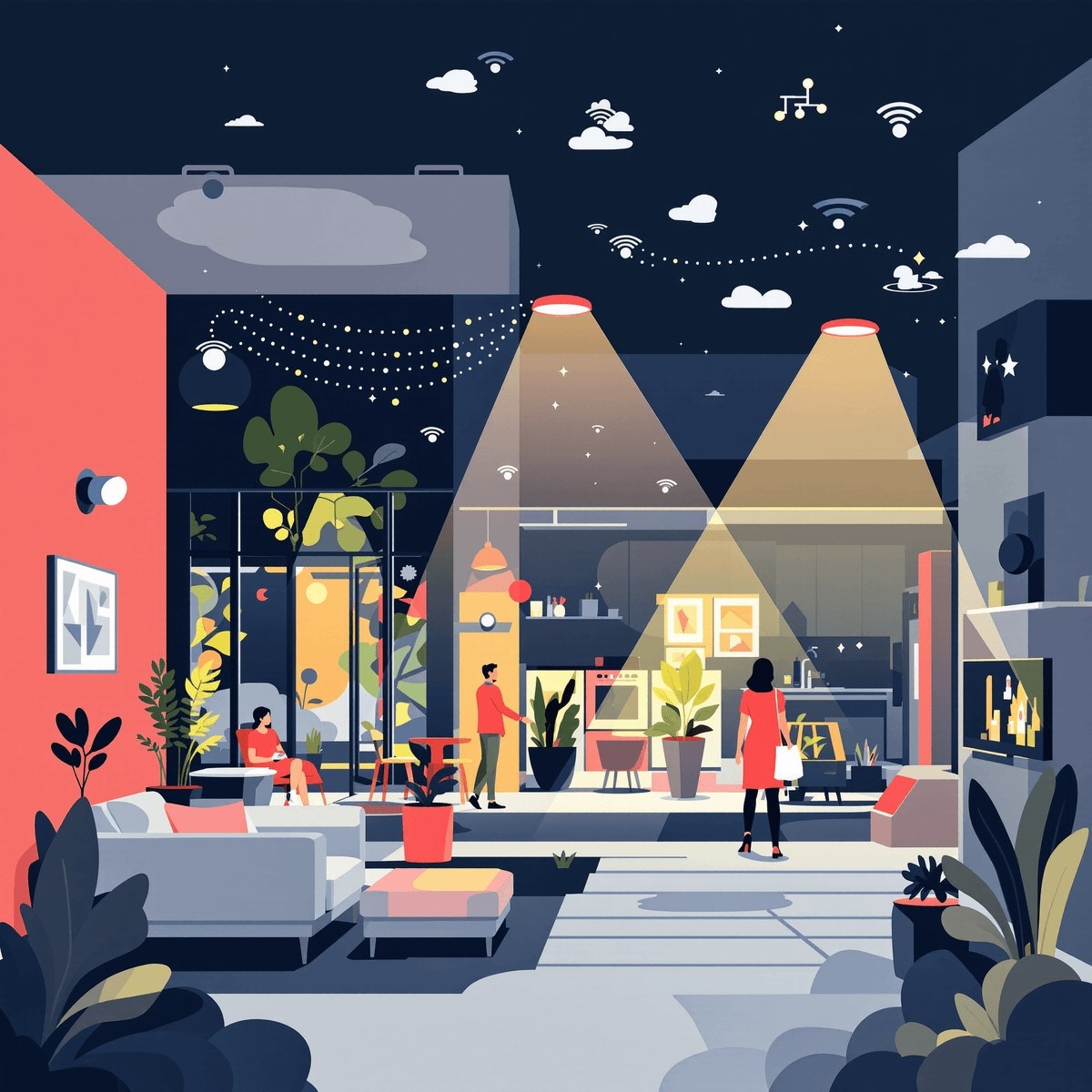
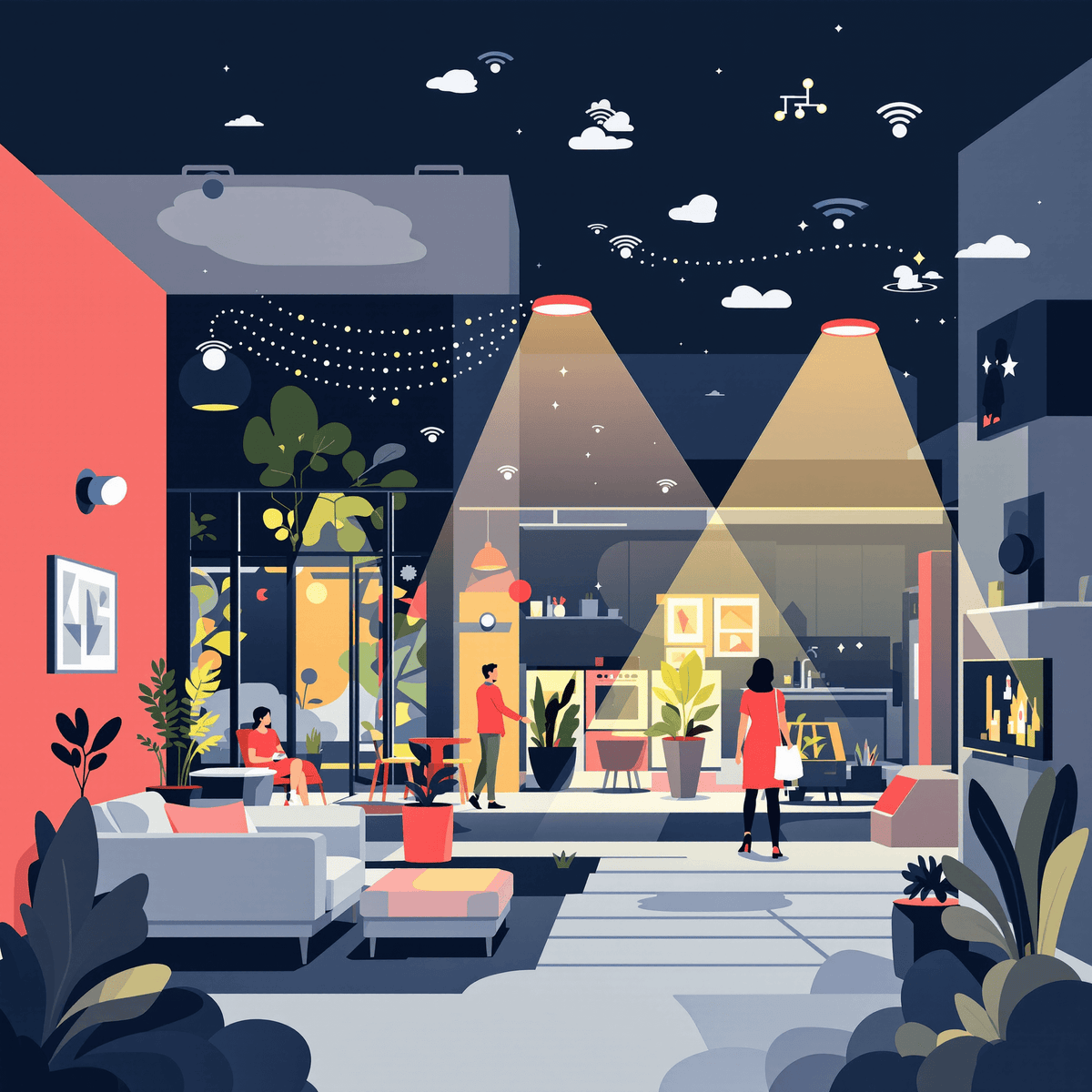
Lights controlled only by manual switches can stay on in empty rooms and leave people searching for switches in dark hallways or stairwells. Lighting that responds to occupancy and available daylight can reduce wasted electricity and household carbon emissions while improving convenience and safety.
Motion sensors use infrared detection to recognize movement, and models with ambient light sensing can restrict lighting activation to when it is needed. The following eight considerations help match a sensor to your rooms, automation requirements and existing smart home system.
Detection range and placement
Residential sensors commonly detect movement over 3-12 metres. Actual coverage depends on mounting height, orientation and environmental conditions, so range alone does not guarantee freedom from blind spots or unwanted activations.
- Mounting height changes both detection distance and field of view.
- Corner mounting can maximize room coverage while limiting false triggers.
- Ceiling-mounted sensors provide 360-degree coverage.
- Directional wall-mounted models suit entrances and hallways.
Professional installation guidance recommends testing the detection pattern before fixing a sensor permanently. Keep the intended coverage clear of interference from heating vents, direct sunlight and reflective surfaces.
Communication protocols
The protocol determines hub compatibility, network behavior and future expansion. Z-Wave suits established systems through reliable mesh networking and broad device support, while Thread-enabled sensors with Matter support offer cross-brand interoperability for developing ecosystems.
- Z-Wave: Established reliability and extensive hub compatibility.
- Thread/Matter: Interoperability across brands.
- Zigbee: Strong mesh networking and competitively priced devices.
- Wi-Fi: Direct connectivity, with a possible impact on network bandwidth.
Match the sensor to your hub, and consider mesh range extension, response times and support within your automation platform.
Additional environmental measurements
Multi-function sensors combine motion detection with measurements that give automation rules more context. Temperature readings can coordinate climate control with occupancy; vibration detection can support security-triggered lighting.
- Light measurements help avoid unnecessary daytime activation.
- Temperature monitoring supports climate-aware rules.
- Vibration sensing adds security capabilities.
- Humidity sensing broadens environmental control.
Ambient light controls
A light sensor allows motion-triggered lighting to respond to available daylight rather than movement alone. It can prevent daytime activation or vary brightness as natural light changes.
- Adjustable light thresholds restrict activation in bright conditions.
- Graduated brightness control responds to ambient illumination.
- Time-based adjustments account for seasonal changes.
- Separate zone settings accommodate different rooms.
Professional installations use these controls to provide sufficient light for safety and convenience without unnecessary energy use.
Sensitivity and false-trigger filtering
Adjustable sensitivity helps tailor detection to the room and its occupants. Temperature compensation maintains infrared performance as seasonal temperatures change, while filtering can distinguish people from moving curtains, pets or heating-related temperature fluctuations.
- Pet-immune settings disregard small-animal movement.
- Temperature compensation stabilizes sensitivity.
- Dual-technology detection combines infrared and microwave sensing.
- Machine learning adapts to environmental patterns over time.
Indoor and outdoor durability
Indoor sensors emphasize unobtrusive appearance and detection of subtle movement. Outdoor models must also tolerate precipitation, UV exposure and temperature extremes.
Indoor priorities
- Design that blends with the décor.
- Sensitivity to small movements.
- Battery optimization for longer operation.
Outdoor priorities
- IP65+ weather protection rating.
- Extended operating temperature ranges.
- UV-resistant housing.
- Greater range for larger areas.
Plan mounting positions to balance coverage with protection from direct weather exposure and tampering.
Power and battery management
Battery life varies with detection frequency, transmission intervals and environmental conditions. Intelligent power management can extend operating time without sacrificing responsiveness or connectivity.
USB power offers continuous operation and can enable network repeater functionality, strengthening mesh coverage while removing battery replacement concerns.
- Adaptive transmission intervals respond to activity levels.
- Low-power standby reduces consumption during inactivity.
- Early battery warnings help schedule replacements.
- Solar charging is an option for outdoor installations.
Advanced automation features
Some sensors extend beyond simple movement detection. Occupancy counting can tailor room automation to the number of people present, while configurable LEDs provide status feedback.
- Scene activation runs personalized lighting configurations.
- Security integration sends immediate breach notifications.
- Voice assistant support allows spoken commands.
- Machine learning adapts to household routines.
These features support more complex responses to occupancy patterns and user preferences than basic motion-triggered switching.
Three sensors for different needs
The source recommendations cover budget-oriented installations, multi-sensor monitoring and newer connectivity options, balancing detection, integration and value.
Z-Wave Fibaro Multi Sensor
For comprehensive indoor monitoring, this ultra-compact model combines motion, light, temperature and vibration detection. Intelligent object recognition and adjustable sensitivity make it a strong option for lighting rules that need environmental context.
Z-Wave Zooz Mini Motion Sensor
This budget-conscious option offers reliable motion detection and a good detection range at competitive pricing for multi-room installations. It can operate on batteries or USB power, with USB providing continuous operation and network repeater functionality.
Thread Heiman Occupancy Sensor
This model combines Matter compatibility with motion and light sensing. Automatic threshold adjustment and temperature compensation help maintain consistent performance as environmental conditions change through the seasons.
Plan your installation
Start by defining the coverage you need and checking compatibility with your smart home ecosystem. Choose sensors that fit your technical requirements and mounting preferences, then begin in busy areas such as hallways and main living spaces before extending coverage to other rooms or outdoors.
Well-matched motion sensors can reduce energy consumption, strengthen security and simplify lighting control. Vesternet offers a motion sensor collection and technical guidance on product selection, installation planning and integration.

