Good airflow makes everyday activities more comfortable, from working on a warm afternoon to cooking, exercising or sleeping through a hot night. Homey can bring fans, air conditioning and sensors into shared routines, reducing the need to adjust each device manually.
Temperature and humidity sensors can identify a warm or damp room, while an air quality monitor can indicate when it needs airing. A connected fan, air conditioner or smart plug can then respond automatically. These routines can cool rooms before they become uncomfortable, move still air or pause cooling while a window is open.
Run fans when they are useful
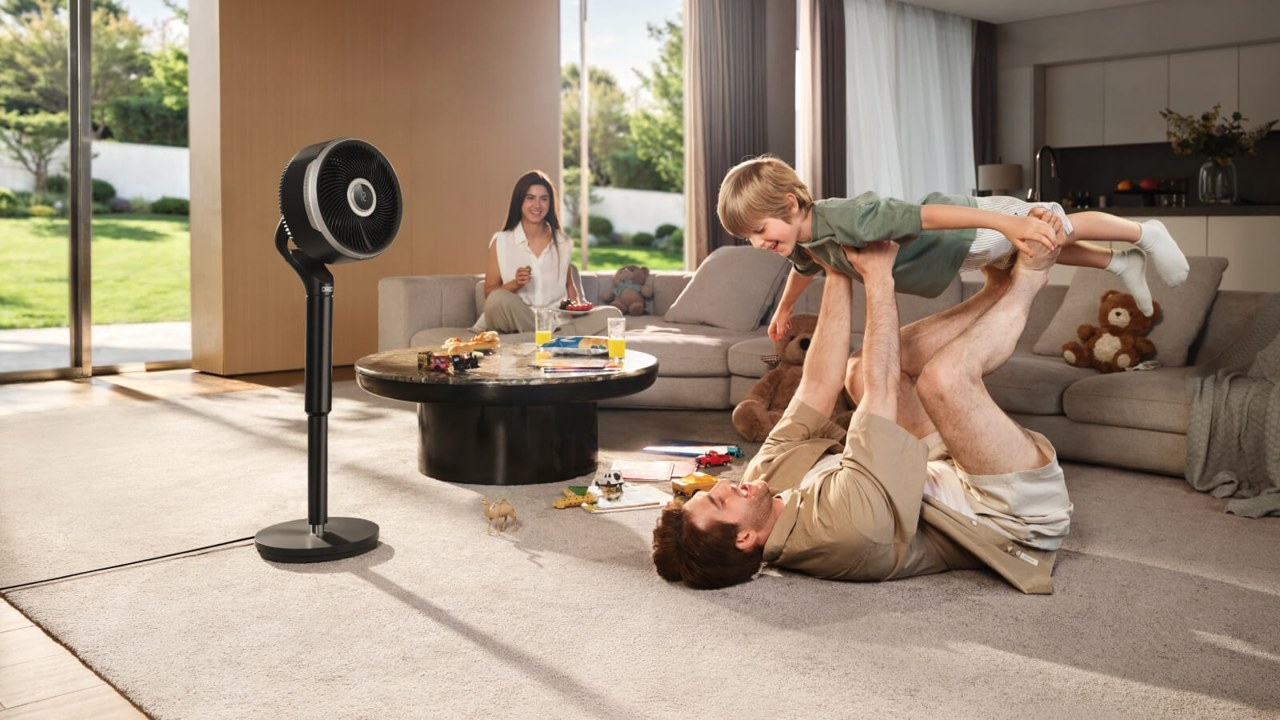
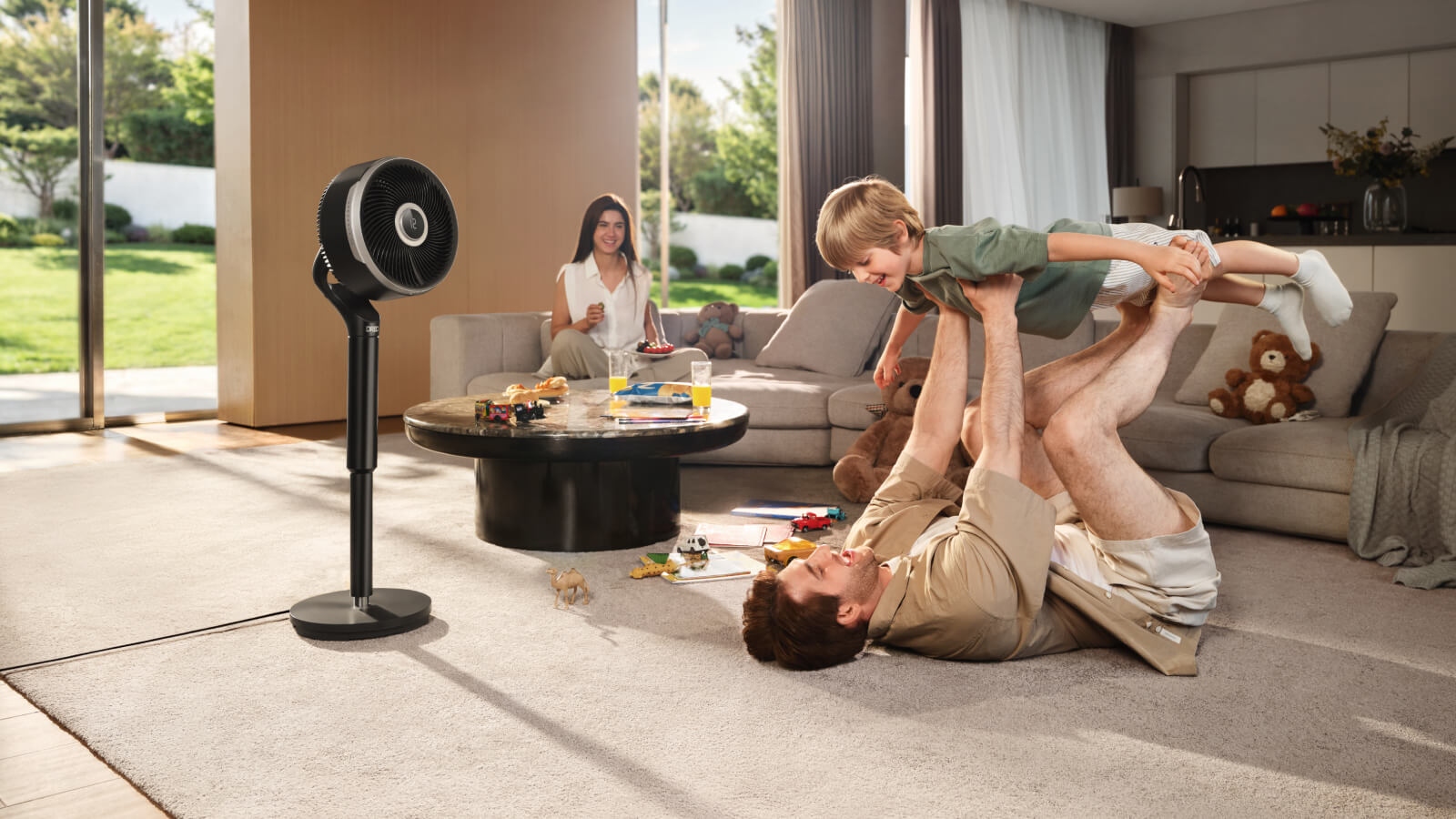
Fans circulate air and help rooms feel cooler. With Homey, a Flow can start a fan when the temperature passes a chosen threshold, while a motion sensor can restrict operation to times when someone is in the room.
In a bedroom, you could start the fan gently before bed and have it switch off during the night. In a home office, it could respond to afternoon warmth and stop when you leave. Rather than running continuously, the fan operates around the room's needs.
Coordinate air conditioning with the room
A bedroom Flow can begin cooling before bedtime, then reduce or stop it once a comfortable temperature is reached. A door or window sensor can pause air conditioning when a window opens and allow the normal routine to resume after it closes.
Smart window coverings can also help: partially closing blinds on sunny afternoons keeps heat out and reduces the work required from the air conditioner. Fans can circulate cooled air, potentially maintaining comfort with less air conditioning.
Balance airflow, humidity and energy use
Cooling alone does not determine comfort. Excessive cooling wastes energy, while insufficient airflow can leave a room feeling stuffy. Connecting devices allows Homey to respond to different conditions:
- After a shower, rising humidity can trigger a bathroom fan through a smart plug or compatible ventilation setup.
- If an empty living room becomes warm, Homey can delay starting larger devices.
- When air quality declines during a movie night, a connected fan or air purifier can help refresh the room.
Humidity readings can also trigger ventilation or notifications. Presence, temperature and window status can prevent devices from running unnecessarily, reduce cooling while nobody is home and prepare rooms before people return.
Build routines around daily life
Flows can combine temperature, humidity, presence, time of day and device status. That makes it possible to prepare a bedroom for sleep, keep an office comfortable during video calls, or adjust the living room before guests arrive. A nursery, attic or south-facing room can receive attention before it overheats, while bathroom ventilation can follow shower-related humidity.
Lighting can participate too: an evening Flow might dim the lights as the fan slows, while another reduces bedroom cooling later at night.
To begin, choose one room, a temperature and humidity sensor, and a connected fan or air conditioner. Add further routines as needed.
Device compatibility
- Fans: Homey can control compatible smart fans directly and conventional fans through a smart plug.
- Air conditioners: Many models connect through compatible integrations, infrared controllers or smart plugs. Support depends on the model; a new smart air conditioner is not always necessary.
- Window-aware control: A door or window sensor can let Homey pause either fans or air conditioning when a window is open.
Terms used in climate automation
- Flow: A Homey automation linking triggers, conditions and actions.
- Smart fan: A fan with remote or automatic control.
- Air conditioning: Equipment that cools indoor air.
- Smart plug: A plug that allows Homey to switch a connected device on or off.
- Temperature sensor: A sensor measuring how warm or cool a room is.
- Humidity sensor: A sensor measuring moisture in the air.
- Air quality monitor: A device measuring indoor-air characteristics such as CO₂, particles or VOCs.
- Door or window sensor: A sensor reporting whether an opening is open or closed.
- Presence detection: A way to determine whether someone is home or in a particular room.
- Smart window coverings: Blinds, curtains or shades that open and close automatically.

